What Does Homesteading Mean? A Clear Answer
Editorial team, smallholdingnotes.com · · 5 min read
Say which meaning you need, then measure the work
“What does homesteading mean?” is a fair question, because the word now does at least three jobs, and they are not interchangeable. One is a household style: growing a useful amount of food, perhaps keeping a few animals, and cutting some of the bills that come from buying everything in. One is a legal idea in many U.S. states: a homestead exemption that can protect a primary home, to a defined extent, from certain creditors. One is historical: the nineteenth-century federal Homestead Act, which offered public land under conditions that are not a present-day application form for a free farm.
If you mix those three, you get expensive confusion. You do not get a free quarter-section from a website, and you do not get a garden by filing a court form. This page answers the everyday, smallholding sense of the word, flags the other two so they do not ambush you, and points you to official places when the work becomes agricultural or legal.
For practical farming and gardening help, start with a local Cooperative Extension office and with USDA beginning-farmer resources such as farmers.gov guidance for beginning farmers. For legal homestead exemptions, start with your state court or legislature’s official pages, not with a social post. Nothing here is legal advice, tax advice, or a veterinary instruction.
A short definition you can actually use
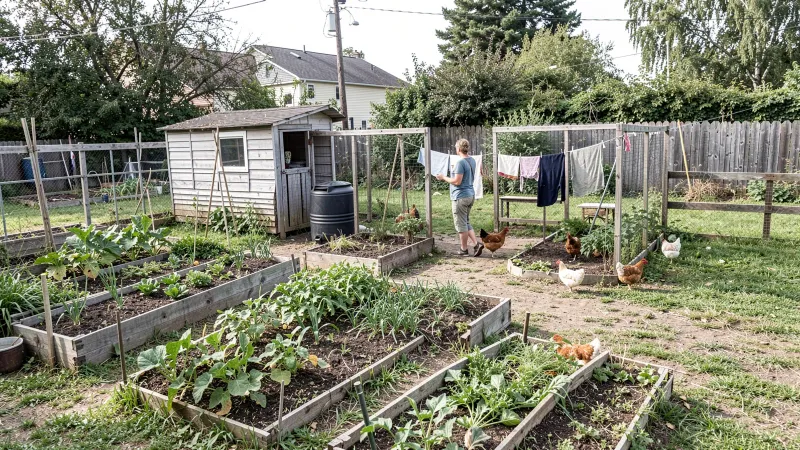
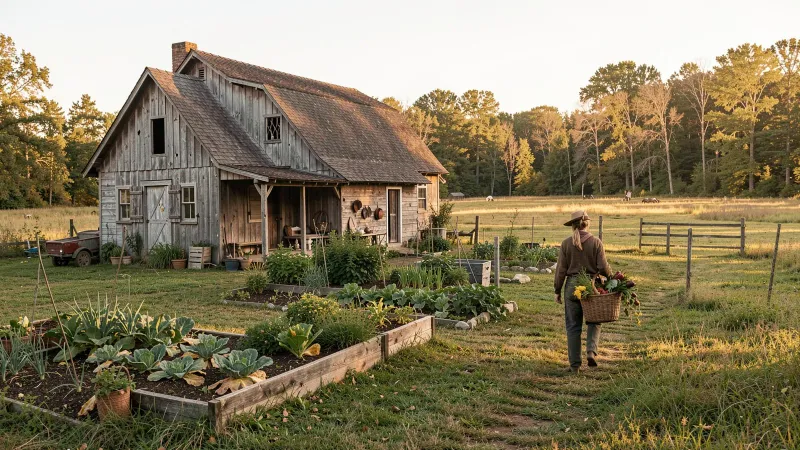
In current ordinary use, homesteading means running a household that produces a meaningful share of its own food or fuel, on land or even a small lot you have the right to use, with a budget and a calendar you can keep. It is not a purity test. A serious vegetable garden and a flock of hens on a town lot can be a homestead in this sense. A large acreage with no plan and a rusting tractor can fail the same test.
What is homesteading meant to include, at minimum, if the word is going to be useful? A place, a set of repeated jobs, and a way of counting whether the work is paying for itself in food, skill, or lower bills. If you cannot name those three, you are still at the daydream stage, which is a fine stage, and not yet a homestead.
The historical federal program is worth knowing so you can ignore people who speak as if it were still open in the old form. The legal exemption is worth knowing so you do not confuse “I filed a homestead declaration” with “I started a farm.”
A scale-and-cost table, not a romance
| Scale | Typical work you can measure | Money you should expect to spend first | Official help that is actually useful |
|---|---|---|---|
| A balcony or a small yard | Containers or a bed, water use, a short crop list | Mix, seed, a soil test if you can, tools you will use weekly | Extension vegetable and container guides; a soil-test lab |
| A town lot with some ground | Beds, maybe a few hens if zoning allows, storage for feed and tools | Fencing, housing that meets local rules, composting space, water | County zoning and animal ordinances first; then extension poultry and garden pages |
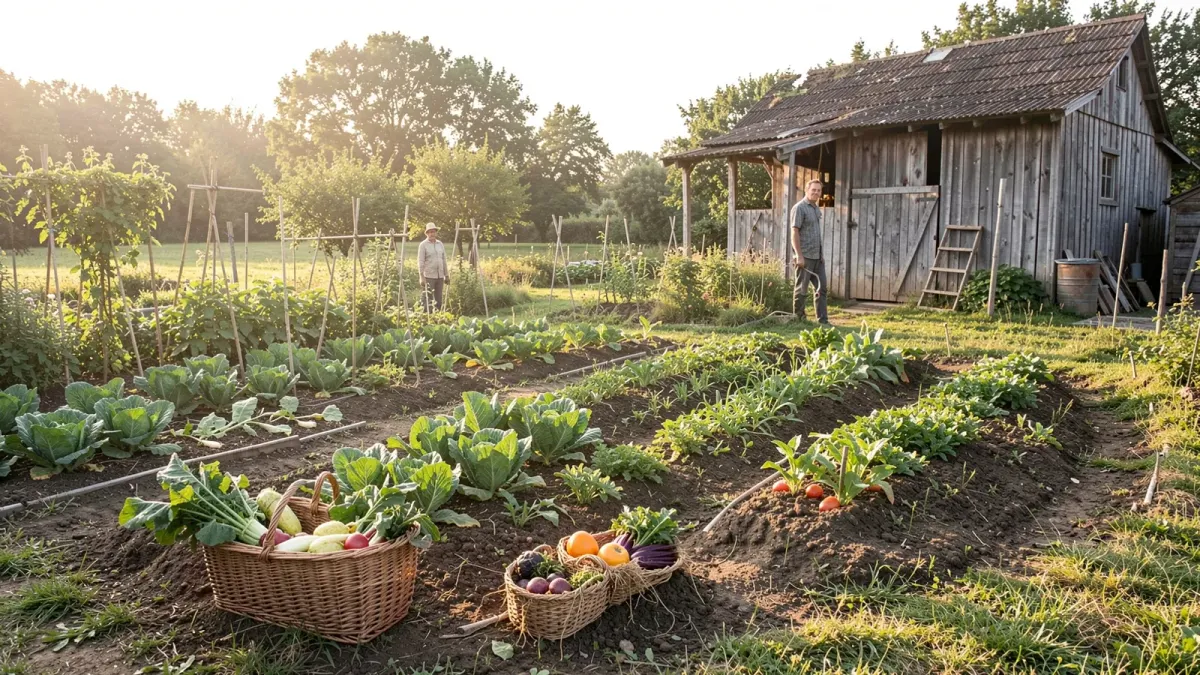
| A rural smallholding, still a household, not a business yet | Food plus some surplus; machinery only if the jobs need it | Land costs, water, septic or sewer, insurance, and the first infrastructure, which often dwarfs the seed bill | County planning, well and septic rules, USDA and extension beginning-farmer pages |
| A farm you hope will sell something | All of the above, plus records, food-safety rules, and a market | That is a business. Budget it as one | USDA, state agriculture departments, and professional advice, not a manifesto |
Notice what is missing from the first column: a requirement to be off the grid, off the tax roll, or off the map. Those are separate projects, with their own costs and codes.
How to test the word against a real week
Write down the hours you already have in a normal week, not a holiday week. Then write the jobs: water, weeds, feed, fences, processing, repairs. If the hours do not fit, the meaning of homesteading for you, this year, is smaller than the picture you saved.
Check rules before you check livestock listings. A county that forbids hens, or a well that cannot support a larger household, will not be argued into fertility by enthusiasm. Official zoning and health pages are part of the definition, because they decide what you may legally do on the land.
Count money the same way. Seed is cheap. Time, fencing, vet bills when they come, water, and a failed first season are not. USDA and extension services exist in part so that beginners do not have to buy every lesson at full retail. Use them. Do not treat a social-media homestead as a data source for yields or income.
If your actual question was legal — “does homesteading mean I can protect my house?” — stop here and look up your state’s official homestead exemption materials. If your actual question was historical, look at official federal history of the Homestead Act, and do not plan a move on the hope of a similar giveaway.
A checklist for using the word honestly
- I can say whether I mean a lifestyle, a legal exemption, or a history lesson
- I have a place I may legally use for the jobs I want
- I have counted hours in a normal week
- I have looked at local zoning, water, and animal rules
- I have a first-year list that is smaller than my last saved photograph
- I know where my extension office is
- I will get legal or agricultural advice from qualified people when the sums or the stock get serious
Questions that usually come next
Is a backyard garden really a homestead?
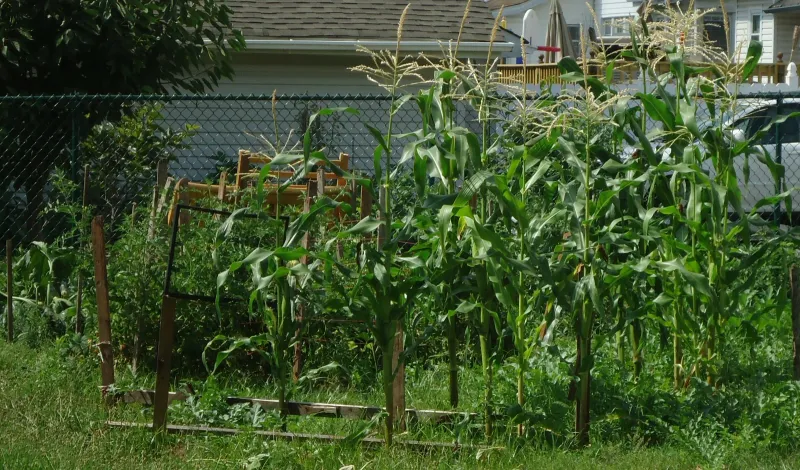
If you want the word to mean “a household that produces some of its own food on purpose,” yes, it can be. If you want the word to mean “a farm,” no. Use the scale that matches the work.
Can I still get free land under the Homestead Act?
Do not plan on the nineteenth-century program. It is not a current, general route to a free family farm. If a modern public-land or surplus-property process exists, it will have its own official rules, which you should read on government sites, not in a video caption.
Does “homesteading” mean I will be self-sufficient?
It means you may be more self-provisioning than you were. Complete self-sufficiency is a high, expensive target, and most households remain tied to jobs, shops, tools, and a grid of some kind. That is not a moral failure. It is arithmetic.
Where should I start if I want the lifestyle, not the legal form?
With your current ground, a soil test, a short crop list, and the extension office. Add animals only when zoning, housing, and daily care already fit. The clear answer to “what does homesteading mean” is, at that point, simply: the work you can repeat.
Tags: #homesteading#smallholding#beginning farmers#land#self sufficiency