Meaning of Homesteading: A Practical Guide
Editorial team, smallholdingnotes.com · · 7 min read
Two meanings, and why the confusion is deserved
The meaning of homesteading depends on which century you are standing in. In U.S. history, a homestead was often a claim under federal land law, most famously the Homestead Act of 1862, which allowed eligible people to gain title to public land if they lived on it and improved it. That program is closed. You cannot “file a homestead” on the public domain the way a nineteenth-century family did, and a blog post that talks as if you can is not a practical guide.
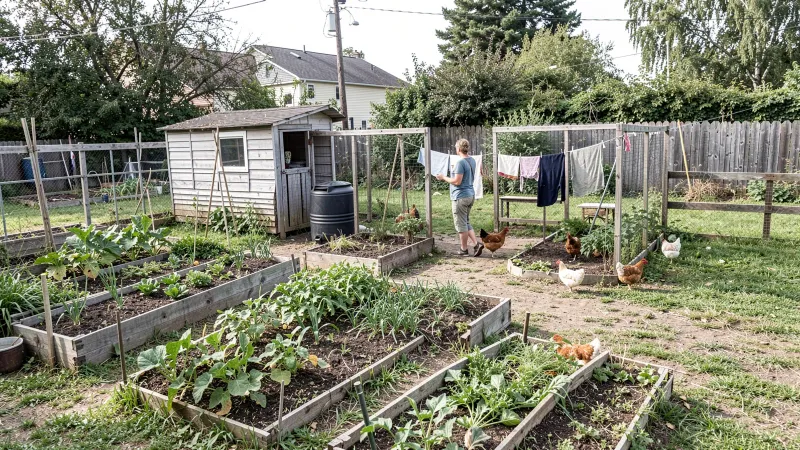
In ordinary speech today, homesteading usually means making more of your household’s food, energy, or goods at home, often on a small plot, and reducing how much you buy for everyday needs. It can happen on a few acres, in a farmhouse, or in a backyard with a garden and a clothesline. The National Park Service summarizes the historical law on its page about the Homestead National Historical Park and the Homestead Act. Modern how-to help, by contrast, lives with cooperative extension and with USDA resources for people who want to grow food or start a small farm, including the USDA farming and ranching pages and your state’s extension service.
This article is about the modern, household meaning, with a clear line back to the history so the word does not get mystical. It is also about starting small, because a romantic picture of “going off grid next month” is how people overspend.
What modern homesteading usually includes
You do not need a standard acreage, a certain number of animals, or a uniform aesthetic. You need a short list of household systems you are willing to run in all seasons, not only in June.
Common pieces, in roughly the order many households can afford them:
- Growing some food: herbs, a few vegetables, fruit if the site allows, maybe a later expansion into a larger garden
- Preserving some of that food: freezing, canning only if you follow current tested methods, drying, or simple storage
- Cooking from ingredients more often, so the garden has somewhere to go
- Repairing clothes and tools, and buying used when it is sensible
- Managing water and waste more carefully: rain barrels where local rules allow, compost, less trash
- Small livestock, only where it is legal and you already have housing, time, and a plan for feed, time off, and veterinary care
- Energy projects, from weatherstripping and a clothesline up to systems that need permits and a real budget
None of these is mandatory. A family that grows tomatoes and learns to mend is already homesteading in the modern sense. A family that buys a tractor before they have used a spade is shopping.
If you want official, practical growing and livestock help, start with a land-grant university extension office. Those services exist to answer the “how to homesteading” questions that a mood board cannot: planting dates, soil tests, coop space, food preservation methods. USDA programs for beginning farmers are relevant if you are actually going into production, not only planting a border of kale.
A legal side note that saves confusion: some states use the word “homestead” in property-tax or creditor-protection law. That is a different meaning again, and it has nothing to do with keeping chickens. If someone promises that “declaring a homestead” will give you land or remove you from ordinary law, stop and get the rule from an official state page or a qualified attorney.
A practical table: start with what you already pay for
Think in household budget lines, not in lifestyle identity.
| If you already spend time or money on… | A first homestead step that usually fits | What to postpone | Official help to look up |
|---|---|---|---|
| Groceries and a bit of yard space | A small garden or a few containers, planted for food you already eat | A greenhouse, a huge orchard, or crops you will not cook | Local extension planting dates and soil testing |
| A high trash bill and food waste | A compost setup allowed in your town, and a more careful weekly menu | Equipment you do not have space to use | Local solid-waste rules |
| Clothing replacement | Mending, hemming, and shopping used for the next layer | A full spinning-and-weaving setup | None required; a basic sewing guide is enough |
| Energy bills | Weathersealing, shades, drying clothes without a dryer when you can | A major off-grid system you have not priced or permitted | Energy extension or official energy.gov efficiency advice |
| A wish for eggs or milk | A legal check, then proper housing, then a small flock or none at all | Animals as a first purchase | Extension housing and local ordinance pages |
| A rural property with more land than time | One enterprise you can keep up in winter, plus a written weekly hour budget | “A little of everything” on day one | USDA beginning farmer resources and extension |
The pattern is the same in a city lot and on ten acres: start with one system, run it through an off season, then add the next. Winter is the test. A garden that only works in July is a hobby garden, which is still worthwhile, but it is not yet a household system.
How to homestead without buying a fantasy
Write down the hours you actually have in a normal week, not a perfect one. Then write down the space, water, sun, storage, and local rules. Sun matters for food. Rules matter for animals, rain barrels, and outbuildings. Storage matters for anything you preserve.
A reasonable first year, for many households, looks like this:
- A soil test and a bed or a set of containers you can reach with a hose
- A short crop list of foods you already cook
- A way to store or freeze a surplus, even if that is just labeled bags in a freezer
- One repair habit, such as a mending basket that actually gets used
- A second project only after the first one has survived a messy month
Cost control is part of the meaning, not an optional ethic. Used tools, shared equipment, and a modest fence will usually beat a matching set of new ones. If a project requires a loan before you have grown a single meal, shrink the project.
Neighbors and family are part of the work. A household that resents the extra chores will not keep them. Agree on who feeds animals on a Sunday morning before the animals exist. If you live in a town, a quiet, clean, well-kept setup will last longer than a setup that ignores the people next door.
Safety is also part of the work. Food preservation has official, tested methods; do not invent canning times. Livestock has housing and disease rules; extension and a veterinarian are the right voices, not a comment thread. Power tools and heat have the usual household cautions. “Homesteading” does not exempt anyone from those.
A short checklist for using the word honestly
- I know whether I mean the historical land law, a modern household practice, or a state property-tax term
- I can name one system I will run for a full year
- I have checked local rules for animals, structures, and water
- The budget is money I actually have, including feed or water if animals are involved
- Someone is covering the chores when I am away
- I have an official extension or USDA page for the technical parts, not only a video
- I am starting smaller than the picture I first saved
If you cannot check those boxes, you can still garden, mend, and cook. You can call it homesteading when the systems, not the aesthetic, are in place.
Questions people ask about the meaning of homesteading
Does homesteading require land in the country?
No. The historical Homestead Act was about public land, and that program is over. The modern meaning is about household production, which can start in a yard, a community garden, or a small indoor setup, and only later, if you want, on acreage.
Is homesteading the same as being a farmer?
Not necessarily. A farm is a business or a production operation, often with a different tax and regulatory standing. A homestead, in the casual modern sense, may sell nothing at all. If you do start selling food or livestock, look up the official rules; you have left the purely household category.
How do I start if I have almost no budget?
Use space and time you already have: grow a few foods you eat, learn to cook them well, mend what you can, and reduce waste. Borrow or buy used tools. Free official extension publications will take you farther than a cart of new gear.
Can I still “claim land” under a homestead law?
Not under the historic federal Homestead Act, which is no longer granting land that way. Any modern use of “homestead” in tax or housing law is a different process, described on official state pages, and it does not give you a free farm.
Tags: #homesteading#smallholding#home production#beginning farmers